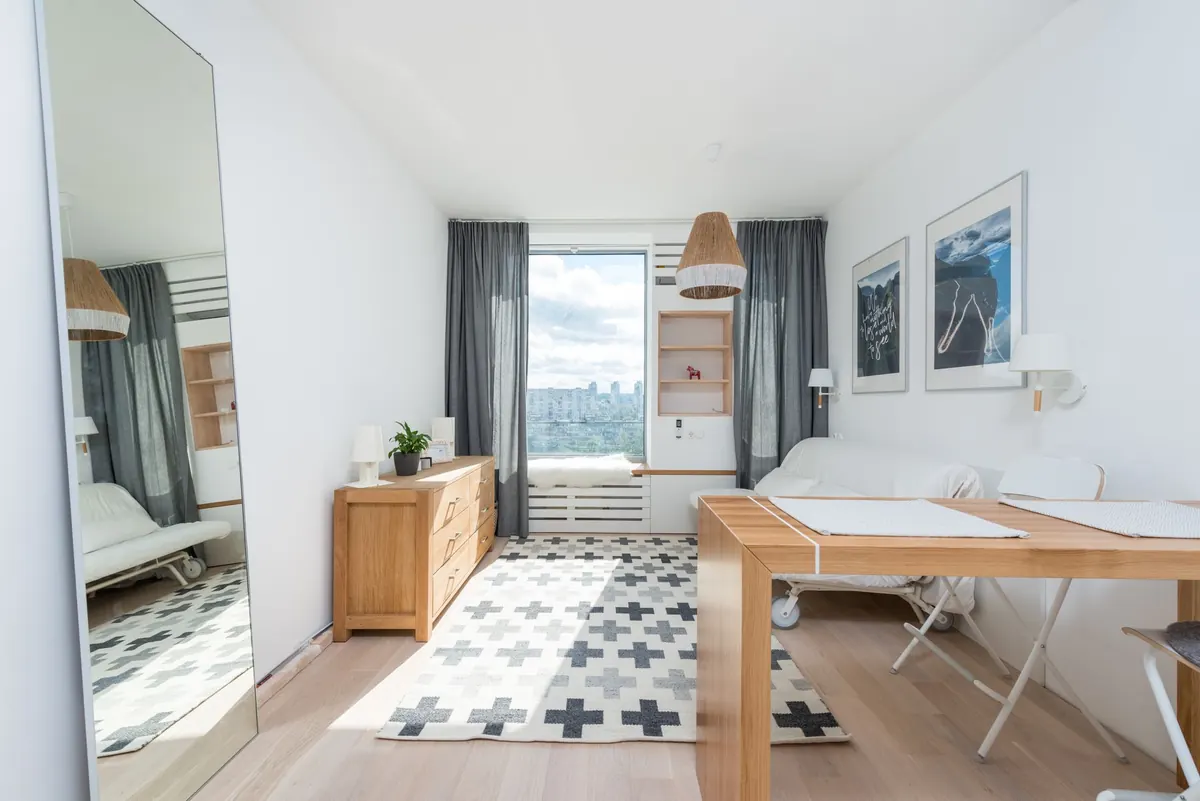
Small Space, Big Ideas: Desk Setup for UK Flats
A desk in a small UK flat is rarely a room of its own. It is the alcove beside the chimney breast, the strip of wall under the sash window, the corner wedged between a radiator and a wardrobe. That is not a problem you solve with willpower. It is a problem you solve with a tape measure, furniture that folds away, and a willingness to use the walls as well as the floor.
What follows is a practical route through the decisions that matter most in tight spaces: what to check before you buy anything, which desks genuinely disappear, how to build storage upwards, and how to choose pieces that look good and do a job. None of it needs a large budget. Some of it does need a landlord's permission before you drill, and any new socket or wiring should be left to a qualified electrician.
Measure Before You Buy
Most small-space mistakes are bought, not made. Before you open a single product page, spend ten minutes with a tape measure and note down the following:
- The width, depth and height of the available space, including skirting boards and pipes, which quietly steal several centimetres.
- Where the sockets are. A desk with no power within reach becomes a shelf with clutter on it.
- Radiator position, so you are not trapping heat or sitting with one warm knee.
- Door swings, wardrobe doors and drawers. A desk you cannot reach is not a desk.
- Chair clearance. Around 75cm behind the desk edge is comfortable; less than 60cm and you will feel boxed in.
- Window sills, sashes and curtain tracks if you plan to sit facing the window.
Standard desk height sits at roughly 72–75cm, with a seat height near 45cm suiting most people at that height. If you are unusually tall or short, or if two people share the space, adjustability is worth more than good looks. A height-adjustable frame solves the problem but needs depth and a stable floor; in a tight corner, a fixed desk with a decent footrest and a firm cushion can work just as well.
Depth matters more than width in a flat. A monitor plus keyboard wants about 55–60cm. A laptop-only setup can survive on 40cm, especially if you add a small riser so the screen sits closer to eye level. Writing down these two numbers before you shop will rule out half your options, which is exactly what you want.
Desks That Disappear
The best small-space desk is one that stops being a desk when you have finished with it. Three formats do this reliably.
Drop-leaf and gateleg tables
A gateleg table folds down to roughly 30–40cm deep, so it can live against a wall or in a hallway and open up to a full working surface in seconds. Look for a solid top rather than a flimsy one, and check that the folded legs do not catch on rugs or door frames.
Wall-mounted fold-down desks
These typically open to about 45–50cm deep and close to around 10cm, which makes them ideal above a radiator-free stretch of wall. They must be fixed into studs or onto a timber batten if the wall is plasterboard, and you need to know what is inside the wall before you drill. In a rented flat, ask first; a botched fixing is far more expensive than a polite email.
Trolleys and nesting tables
A two- or three-tier metal trolley can hold a laptop, a lamp and a couple of box files, then roll into the gap beside the fridge when the day ends. Nesting tables do a similar job without castors. Neither is as sturdy as a real desk, so keep the heavy monitor on a shelf above and use the trolley for the lighter kit.
One question to answer before buying anything folding: where does the monitor go? Lifting a screen down and up every day is a chore you will abandon within a fortnight. Either work from a laptop, or fix the screen to a shelf or arm at the correct height and fold away only the work surface.
Go Up, Not Out
Floor space is the scarcest resource in a flat; wall space above waist height is usually wasted. A shelf fixed 40–50cm above the desk surface holds books, a lamp and a plant without crowding your elbows, and it costs very little. From there, the options multiply:
- A pegboard on the wall behind the desk, with hooks for headphones, scissors, cables and a ruler.
- A magnetic strip fixed to the side of a shelf for small metal tools and clips.
- Magazine files stood on a shelf to corral papers, notebooks and post.
- Hooks on the side of a wardrobe or bookcase for a bag, a lead and a folded blanket.
- Under-desk drawers or a shallow box on a low shelf for chargers and stationery.
- Storage that hides: a lidded ottoman or a bench with a lift-up seat can double as a seat for guests.
Keep the top shelf for things you like looking at and the lower ones for things you touch daily. Anything you have not reached for in a month probably belongs somewhere else.
Decor That Earns Its Place
In a small flat, every object is either useful, beautiful or in the way. Multipurpose pieces are how you get both. A lamp with a built-in USB port removes a charger. A shallow tray keeps keys, a watch and a pen in one place instead of scattered across the desk. A plant in a weighted pot adds life and hides a cable run. A mirror hung opposite the window bounces daylight into a dark corner without costing anything to run.
Art can lean on a shelf rather than hang on a wall, which saves drilling and lets you swap it around. A single rug tucked under the desk defines the workspace and stops it drifting into the rest of the room. And if you buy one good chair rather than two cheap ones, you will sit better, work longer and take up less floor.
Light, Cables and a Calmer Corner
Place the desk so you are side-on to the window rather than facing it; this cuts glare on the screen and shadows across your keyboard. Add a task lamp with a warm bulb for the evenings, positioned so the light falls on the desk rather than into your eyes.
Cables are what make a small desk feel chaotic. A switched extension lead fixed under the desk top, a few hook-and-loop ties, and a couple of adhesive clips will sort most of it in an afternoon. Label the plugs with small stickers so you can unplug the right one without getting on your knees. If you need an extra socket installed, or the existing wiring looks suspect, call a qualified electrician rather than extending anything yourself.
Renting: Ideas That Leave No Trace
If you cannot drill, you still have options. Freestanding shelving units, tension poles in an alcove, over-door hooks and trolleys all work without a single hole. Removable adhesive strips handle light loads such as pictures, small shelves and cable clips, but test one on a hidden patch of paint first, because some finishes and wallpapers come away with them. Anything holding real weight, including a wall desk or a laden shelf over your head, needs a proper fixing. Check your tenancy agreement and, where it applies, ask for written permission.
The Daily Reset
Small desks fail slowly. A mug here, a charger there, and within a week the surface is gone. A five-minute routine at the end of the working day keeps the space usable:
- Take cups, plates and glasses back to the kitchen.
- Put pens, headphones and chargers into one tray or drawer.
- Fold the desk down, or push the chair fully under it.
- Wipe the surface and shake out the cushion.
Do that and you start each morning with a clear surface rather than a tidying job, which is the whole point of a well-planned small workspace. It does not need to be beautiful in a photograph. It needs to fit your room, hold your things and be ready when you sit down.
Photo: Max Vakhtbovych / Pexels